
Dysgraphia
Learn about the symptoms and causes of dysgraphia (handwriting issues), why so many with this condition are struggling readers, and what you can do to help.

Recognize the signs your child might be struggling
Learn about the root causes and lead to reading difficulties
A guide to visual processing and why it matters
How BrightWay Kids improves reading mastery
Dysgraphia
The signs of dysgraphia issues
Dysgraphia symptoms present in many ways both at home and in the classroom that may be dismissed to the uninitiated:

Academic
- Incomplete, poorly expressed ideas
- Frequent spelling errors
- Struggles to structure sentences logically
- Problems learning letter shapes
Physical
- Trouble holding pencil
- Illegible or inconsistent handwriting
- Frequent erasures or rewriting
- Verbalizes words while writing
What is dysgraphia?
Dysgraphia is a neurological learning disability that affects writing skills, making handwriting and organizing written thoughts difficult despite normal intelligence and adequate teaching .
Causes of dysgraphia and how BrightWay Kids helps
Dyscalculia has neurological and cognitive origins. Research indicates it is multifactorial, meaning several interrelated factors in brain development and function contribute to the math difficulties. Key causes and theories include:
BrightWay Kids is a therapeutic gaming platform uniquely designed to address dysgraphia by targeting the root causes while making the learning process engaging and effective.
Fun games that address dysgraphia issues
Subscribe and get anytime access to the BrightWay Kids platform. Get the Dysgraphia monthly subscription – only $59.99 per month. Start or stop anytime.
How BrightWay Kids can help your child thrive
Daily dose of therapeutic fun
At BrightWay Kids, we believe in making handwriting practice engaging and effective. Our hands-on activities target the unique challenges of dysgraphia by blending visual, motor, and cognitive exercises. Whether it’s letter formation games, fine motor drills, or visual-motor integration tasks, every activity is designed to support skill development in a fun, encouraging environment. By focusing on coordination, precision, and memory, children gain the confidence and ability to express themselves on paper.
We understand your journey
We recognize that dysgraphia can be a frustrating challenge for children and their families. Handwriting struggles often impact confidence, self-esteem, and overall academic performance. That’s why BrightWay Kids offers a holistic approach, addressing not just the physical skills of writing but also the underlying neurological, visual, and emotional factors. Our tailored activities aim to break the cycle of frustration and empower children to thrive in both school and life. With patience, understanding, and targeted support, we help each child unlock their full potential.
Neurological
Related symptoms
Difficulty forming letters and keeping handwriting consistent
Poor fine motor control, leading to slow and labored writing
Trouble transferring thoughts into written words
Detailed explanation
Neurological differences in the motor and language centers of the brain often underlie dysgraphia. These challenges disrupt the smooth coordination of hand movements and cognitive processing needed for fluent writing. As a result, children may struggle to produce legible, organized work within a reasonable timeframe.
Connection to visual processing skills
Weak visual-motor integration, a core visual processing skill, makes handwriting more difficult by reducing the brain’s ability to coordinate visual input with motor output.
BrightWay Kids Activities
Letter Formation Games
Teach proper letter shapes through guided visual and motor tasks.
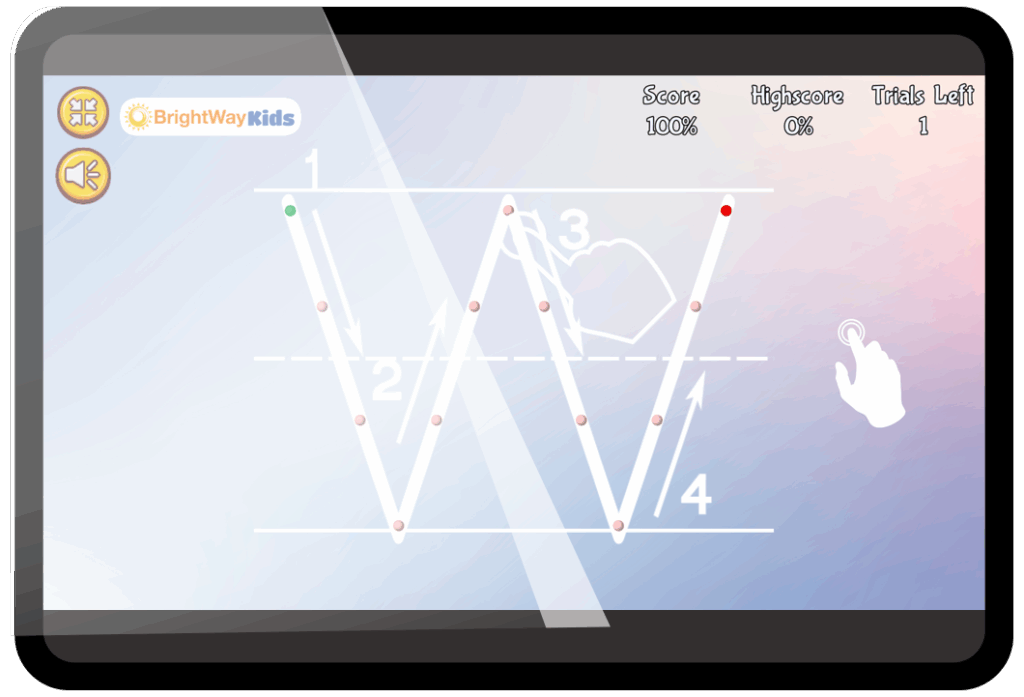
Trace It
Why It Helps
Builds accurate letter shapes and stroke order, creating strong visual-motor memory so handwriting becomes more legible and consistent.
Description
Follow the dotted path from start to finish to trace each letter; listen for the pop to confirm accuracy.
Fine Motor Coordination Drills
Strengthen land control and precision for smoother handwriting.
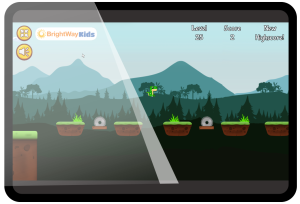
Dino Adventure
Why It Helps
Improves finger control, timing, and directional precision—skills that translate to smoother, less labored writing.
Description
Use arrows/taps to move forward/back and jump; navigate obstacles to reach the goal.
Visual-motor Integration Tasks
Enhance the ability to coordinate visual cues with hand movements.
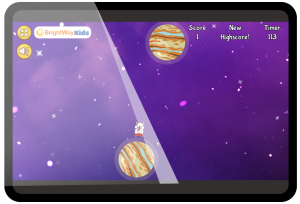
Rotational Sync
Why It Helps
Trains steady eye-hand timing and controlled, goal-directed movements, supporting steadier lines and better spacing in handwriting.
Description
Tap in rhythm to jump the marker from one rotating node to the next without missing as speed/angles change.
Motor skills
Related symptoms
Awkward or tight pencil grip
Uneven or inconsistent spacing of letters and words
Complaints of hand fatigue or cramping during writing tasks
Detailed explanation
Fine motor skill deficits disrupt the small, precise movements required for handwriting. This leads to inefficient and uncomfortable writing mechanics, resulting in poor handwriting quality and slower task completion.
Connection to visual processing skills
Poor fine motor control is often linked to weak spatial awareness and visual discrimination, as children struggle to align and size their letters properly. Strengthening these visual skills supports more controlled motor output.
BrightWay Kids Activities
Pencil Control Challenges
Strengthening fine motor precision makes handwriting less tiring and more consistent.
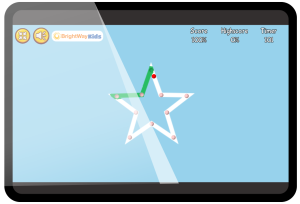
Trace It-Shapes
Why It Helps
Strengthens grip control and fine motor precision by having children follow a specific guided path, building the motor steadiness and control needed for fluent handwriting.
Description
Use your finger or stylus to trace shapes along a dotted guide from the green start to the red finish, listening for the pop to confirm accuracy.
Spacing and Alignment Exercises
Building spatial awareness helps children place letters and words evenly and consistently.
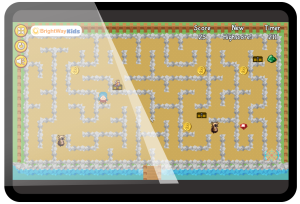
Maze Challenge
Why It Helps
Improves spatial organization and controlled hand movements by requiring careful navigation in a confined path, which parallels the ability to keep letters evenly spaced and properly aligned on paper.
Description
Use keyboard arrows or touch controls to guide your player through the maze, collecting all treasures and avoiding obstacles before reaching the goal.
Visual Closure Challenges
Completing partial shapes builds the ability to visualize whole letters and words, improving handwriting accuracy.
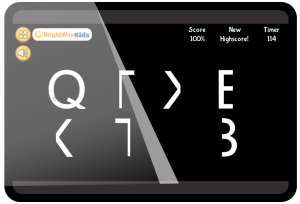
Letter Matching
Why It Helps
Strengthens visual discrimination and letter form recognition by requiring children to complete partially shown letters, reinforcing accurate mental templates for letter formation.
Description
Drag the incomplete letter at the bottom to match the correct completed letter at the top, ensuring correct shape, proportion, and orientation.
Visual-motor
Related symptoms
Messy or disorganized written work with uneven margins or misaligned text
Difficulty copying text accurately from the board or other sources
Overuse of erasers or frequent rewriting
Detailed explanation
Visual-motor integration involves coordinating what the eyes see with what the hands do. When this skill is weak, children struggle to produce legible and organized written work, as their motor actions fail to align with visual feedback.
Connection to visual processing skills
Visual-motor integration is a critical component of handwriting. Strengthening this skill improves a child’s ability to form letters accurately and maintain consistent spacing and alignment.
BrightWay Kids Activities
Copying and Tracing Tasks
Reinforce coordination between visual input and motor input.
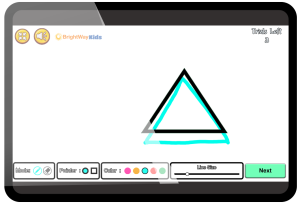
Tachistoscope-Shapes
Why It Helps
Improves visual-motor coordination by requiring children to memorize shapes briefly shown and then reproduce them accurately, reinforcing the link between what they see and what they draw.
Description
When a shape appears, study its location and design. Once the screen is blank, use the drawing tools to recreate the shape in the same position before checking your work.
Alignment Drills
Helps children align text correctly on the page.
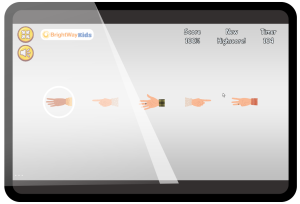
Directionality
Why It Helps
Builds spatial awareness and control by training children to interpret visual direction cues and respond with precise motor actions, supporting even alignment of writing.
Description
See a hand pointing in a direction and match it with the correct keyboard arrow or on-screen tap.
Eye-Hand Coordination Activities
Strong eye-hand coordination helps children guide their writing tool smoothly and accurately, improving letter formation, spacing, and alignmen
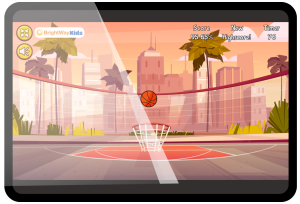
Hoops
Why It Helps
Builds precise timing and movement control by having children track moving objects and position the basket to catch them. These same coordination skills help with directing a pencil or pen during handwriting.
Description
Move the basket using touch, mouse, or keyboard controls to catch basketballs as they fall, focusing on timing and placement to succeed.
Language
Related symptoms
Frequent spelling errors and difficulty recalling letter shapes
Trouble organizing ideas into coherent written sentences
Slow progress in learning basic writing mechanics
Detailed explanation
Language processing delays affect the ability to encode spoken language into written form. This results in frequent spelling mistakes, difficulty structuring sentences, and an overall struggle to express thoughts in writing.
Connection to visual processing skills
Language delays often intersect with visual memory deficits, as children struggle to recall letter shapes or word patterns. Addressing these visual processing challenges supports smoother language encoding.
BrightWay Kids Activities
Word Formation Games
Strong sound–letter–word connections support accurate spelling and fluent written expression.
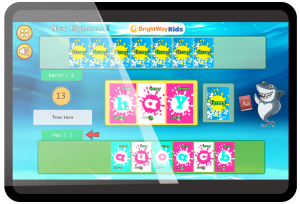
Frenzy Card Game
Why It Helps
Promotes quick thinking and flexible word building by having children form new words from letter cards in real time, reinforcing letter recall, phonics skills, and spelling accuracy.
Description
Take turns creating new words by placing letter cards from your hand onto the board. If no play is possible, draw new cards. Special “Frenzy!” cards allow rapid word building without taking turns.
Spelling Challenges
Recognizing common spelling patterns helps children apply them in writing and reduce errors.

Wordie
Why It Helps
Strengthens spelling pattern recognition by giving feedback on correct letters and positions after each guess, helping children quickly identify common letter combinations and word structures.
Description
Guess the hidden word by entering letters. Green indicates a correct letter in the right place, yellow indicates the letter is in the word but wrong place, and red means it’s not in the word at all.
Memory-boosting exercises
Improved memory for letters and word patterns makes writing more automatic and less effortful.
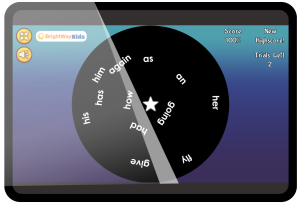
Saccadic Wheel-Sight Words
Why It Helps
Strengthens auditory-visual word recall by having children hear a target sight word and then locate it visually on the wheel, reinforcing rapid word recognition and spelling memory.
Description
Listen to the target word, then click on that word on the rotating wheel as quickly and accurately as possible.
Emotional
Related symptoms
Avoidance of writing tasks and visible frustration or anxiety during assignments
Physical tension, such as gripping the pencil too tightly or fidgeting
Delayed responses or freezing when asked to write
Detailed explanation
Emotional factors, such as frustration or anxiety, often arise as secondary symptoms of dysgraphia. The consistent struggle to write fluently creates a cycle of avoidance and reduced confidence, further hindering academic performance.
Connection to visual processing skills
Anxiety can disrupt visual focus and processing, making it harder to engage in writing tasks. Building confidence through structured visual-motor exercises helps alleviate stress and improve task engagement.
BrightWay Kids Activities
Stress-Reducing Skill-Building Activities
Strengthening skills in a low-pressure setting builds confidence for written expression.
Match It-Letter Sounds
Why It Helps
Helps children build strong letter–sound associations through an engaging, low-stress matching game. Improving these core literacy skills reduces the cognitive load during writing, making the process feel more manageable and less overwhelming.
Description
Listen to a letter sound, then drag and drop the matching letter image from the conveyor belt to its correct spot.
Confidence-Building Challenges
Small, achievable successes build self-esteem and motivate children to persist in writing tasks.
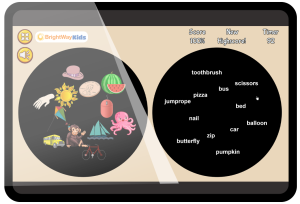
One Match
Why It Helps
Provides quick wins by challenging children to find the single correct match in each round, reinforcing focus and accuracy in a manageable, confidence-boosting format.
Description
Find the one matching pair of image and text in each set and select it before time runs out.
Step-by-step Handwriting exercises
Breaking writing into smaller, achievable steps helps children feel less overwhelmed and more in control.
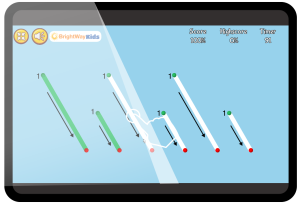
Trace It-Handwriting Prep
Why It Helps
Uses guided tracing of pre-writing strokes to build motor control, hand strength, and visual-motor coordination in gradual steps, making it easier to progress to letter formation.
Description
Follow the dotted paths for basic handwriting strokes, moving from start to finish accurately. Listen for the pop sound to confirm correct tracing.
Prenatal & perinatal
Related symptoms
Poor fine motor control, leading to slow or labored handwriting
Difficulty maintaining proper posture or grip during writing tasks
Delayed development of foundational writing skills
Detailed explanation
Prenatal and perinatal complications, such as low birth weight, prematurity, or oxygen deprivation during birth, can disrupt the development of motor and cognitive skills necessary for writing. These early challenges often result in underdeveloped fine motor coordination and weaker executive function, impacting a child’s ability to perform writing tasks efficiently.
Connection to visual processing skills
These complications can also affect visual-motor integration, as the brain struggles to coordinate the visual and motor skills required for letter formation and alignment. Strengthening visual processing skills helps bridge these developmental gaps, enabling smoother handwriting mechanics.
BrightWay Kids Activities
Motor Coordination Games
Precise hand movements support neat, efficient letter formation. Early motor coordination builds a strong foundation for fluent handwriting
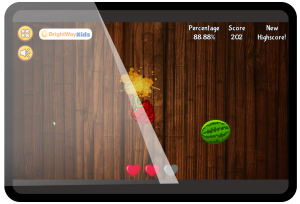
Kung Fu Fruit
Why It Helps
Improves hand control, reaction timing, and movement accuracy by requiring quick, deliberate motions in response to visual cues—skills directly transferable to writing.
Description
Slice fruit as it appears on the screen, avoiding bombs and aiming for multiple slices in one move for bonus points.
Tracing and Alignment Activities
Building spatial awareness helps children size and place letters consistently on the page.
Trace It-Shapes
Why It Helps
Reinforces fine motor control and visual-motor integration by guiding children through specific paths, supporting steady, controlled movements used in handwriting.
Description
Follow the dotted path from the green start to the red endpoint, listening for a pop sound to confirm accuracy.
Controlled Motor Execution
Handwriting fluency depends on the ability to execute controlled, deliberate movements in a specific order.
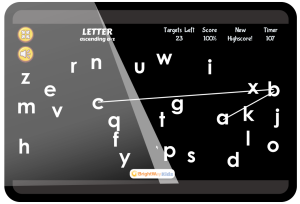
Connect It
Why It Helps
Strengthens sequencing, planning, and fine motor precision by requiring children to connect letters in a set order without breaking the path, mirroring the careful, controlled strokes needed in letter formation.
Description
Remember the assigned letter order, then use the mouse or touch to draw a connecting line between the letters in the correct sequence.


GET STARTED TODAY
Choose one module or the whole series
BrightWay Kids offers focused programs for struggling readers, or get the complete series with BrightWay Kids Reading:
- BrightWay Kids Unlimited $79.99 / mo
- BrightWay Kids Connect $59.99 / mo
Open the door to your child's future
Subscribe to BrightWay Kids and get anytime access with an online account. Your monthly unlimited subscription is $79.99. Start or stop anytime.
Learn more about dysgraphia
Research center
Symptoms of Dysgraphia
Signs your child may be struggling.
Visual Processing in Handwriting and Visual Expression
The connection between poor reading and writing.
Causes of Dysgraphia
Understand the root causes of handrwriting issues.
Dysgraphia: Effective Online Strategies
Tech tools that support handwriting.
Digital Games for Dysgraphia
Can games really help with tracking?
Dysgraphia: Effective Offline Strategies
Hands-on ways to boost visual skills.
BrightWay Kids is a foundational tool to build reading skills
Our carefully designed platform provides deeply engaging, targeted activities for different learner needs. This holistic approach translates to better engagement and faster immersion into the world of reading.
BrightWay Kids isn’t a cure — and it’s not a diagnosis. But it is real, science-backed support that fits into your daily life. Because when your child’s brain gets the right kind of practice…reading starts to feel easier. And even fun.