
Dyslexia
Learn about the symptoms and causes of dyslexia, why so many with this condition are struggling readers, and what you can do to help.
Recognize the signs your child might be struggling
Learn about the root causes and lead to reading difficulties
A guide to visual processing and why it matters
How BrightWay Kids improves reading mastery
Dyslexia
The signs of dyslexia issues
Dyslexia symptoms present in many ways both at home and in the classroom that may be dismissed to the uninitiated:

Academic
- Persistent reading difficulty
- Frequent spelling errors
- Problems with letter naming
- Word finding difficulty
Physical
- Reading avoidance and fatigue
- Letter or number reversals
- Handwriting issues
- Reading comprehension difficutlies

What is dyslexia?
Dyslexia is a specific learning disability that is neurobiological in origin, marked by difficulties with accurate and/or fluent word recognition and by poor spelling and decoding abilities. These difficulties typically stem from a deficit in the phonological component of language (difficulty processing the sound structure of words) that is unexpected in relation to the person’s other cognitive abilities and education. In simple terms, an individual with dyslexia struggles to read and spell despite adequate intelligence and instruction. Dyslexia is now classified as a neurodevelopmental disorder (DSM-5) and often lasts a lifetime.
Causes of dyslexia and how BrightWay Kids helps
Dyslexia does not have a single cause; it is understood as a multifactorial disorder with both genetic and neurocognitive contributors. Key causes and contributing factors proposed by research include:
BrightWay Kids is a therapeutic gaming platform uniquely designed to address dyslexia by targeting the root causes while making the learning process engaging and effective.
Fun games that address dyslexia issues
Subscribe and get anytime access to the BrightWay Kids platform. Get the Dyslexia monthly subscription – only $79.99 per month. Start or stop anytime.
How BrightWay Kids can help your child
Daily dose of therapeutic fun
BrightWay Kids is designed to support children with dyslexia by offering engaging, evidence-based activities that target key areas of weakness in phonological processing, visual attention, and memory.
We understand your journey
Brain structure
Related symptoms
Difficulty with word recognition, reading fluency, and spelling
Trouble connecting sounds to letters and decoding unfamiliar words
Slow, laborious reading, and errors in pronunciation
Detailed explanation
Dyslexia is primarily a neurobiological condition, characterized by atypical activation patterns in brain regions responsible for reading. Neuroimaging studies show that individuals with dyslexia often exhibit under-activation in the left occipito-temporal region, specifically the “word-form” area, which is essential for recognizing written words. This dysfunction impairs the ability to recognize letters and words quickly and accurately. Furthermore, there are differences in the parietal lobe, which plays a crucial role in phonological processing and mapping sounds to letters. These structural and functional abnormalities make it challenging for individuals with dyslexia to decode and spell words.
Connection to visual processing skills:
Dyslexia is also linked to visual processing difficulties, which can affect letter recognition, word alignment, and the visual tracking of text. Challenges with visual attention and discrimination contribute to slow reading and spelling errors. Strengthening visual processing through targeted interventions can help individuals with dyslexia better navigate text.
BrightWay Kids Activities
Visual Word Recognition Games
Support the identification and rapid recall of letter and word shapes.
Sight Words
Why It Helps
Builds rapid recognition of high-frequency words, reducing decoding demands so children can focus on comprehension.
Description
Listen to the word, then find and select it from the scene.
Letter and Word Formation Drills
Enhance visual memory and improve letter recognition and spelling.
Trace It-Letters
Why It Helps
Reinforces correct letter shapes and stroke order through guided tracing, supporting spelling and legibility.
Description
Follow the dotted path from start to finish for each letter; listen for the pop to confirm accuracy.
Word Alignment Exercises
Strengthen spatial awareness and improve organization in written expression.
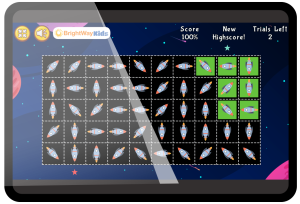
Rocket Trail
Why It Helps
Strengthens spatial awareness and controlled movement by following visual paths, reinforcing alignment skills for reading and writing.
Description
Start at the green star, then click rockets in the correct directional sequence until reaching the red star.
Phonological
Related symptom
Difficulty recognizing and manipulating sounds in words
Trouble with rhyming, segmenting, and blending phonemes
Inaccurate spelling based on sound-letter mismatches
Detailed explanation
A key feature of dyslexia is a phonological processing deficit. This deficit makes it difficult to analyze and manipulate the sounds of language, which are fundamental for decoding and spelling. Children with dyslexia may struggle with recognizing sounds in words, making it hard to connect written letters with their corresponding sounds. This issue affects their ability to sound out unfamiliar words, read fluently, and spell accurately.
Connection to visual processing skills
Visual processing difficulties can exacerbate phonological issues, as reading often involves both sound (phonological) and sight (visual) integration. Dyslexia can cause a disconnect between what is seen and what is heard, making it harder for individuals to associate letters with sounds.
BrightWay Kids Exercises
Phoneme Recognition and Segmentation Drills
Strengthen the connection between sound and letters.
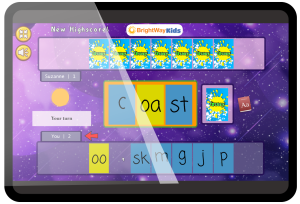
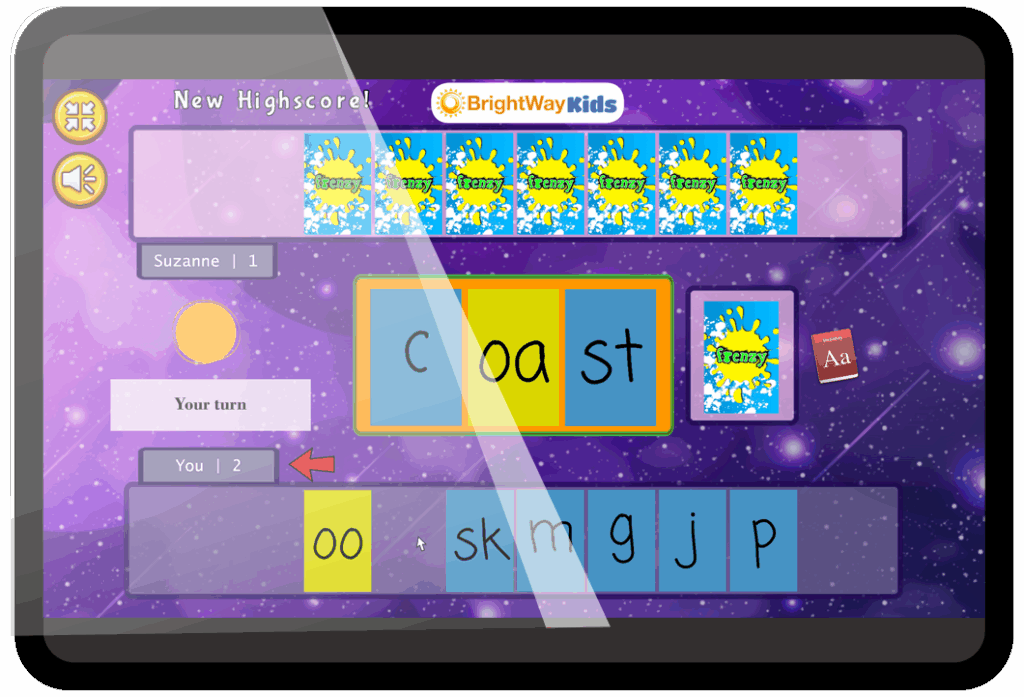
Frenzy Card Game
Why It Helps
Encourages rapid sound–letter association by forming words under time pressure, improving decoding fluency.
Description
Use letter cards to build new words in turn or during a “Frenzy!” free-for-all round.
Rhyming and Segmentation Games
Help children pratice phoneme segmentation and blending skills.
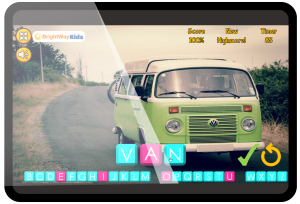
Word Builder CVC
Why It Helps
Reinforces phoneme blending and segmentation by having children construct complete words from individual sounds.
Description
View a picture, then select and arrange the correct letters to spell the word.
Sound-Letter Mapping Drills
Reinforce the correspondence between phonemes and graphemes.
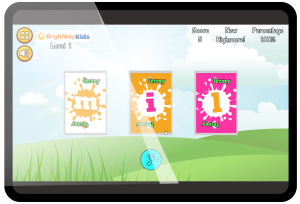
Frenzy Letter Sounds
Why It Helps
Engages children in rapid auditory recognition of letter sounds and immediate visual matching, reinforcing sound–symbol relationships critical for decoding and spelling.
Description
Listen to the letter sound, then quickly find and select the matching letter.
Visual processing
Related symptoms
Difficulty distinguishing similar letters/words
Trouble tracking text smoothly
Poor recall of letter/word patterns
Detailed explanation
Visual processing weaknesses make it harder to interpret and remember text accurately, causing letter reversals, skipped words, and inconsistent spacing.
Connection to visual processing skills
Improving visual discrimination, tracking, and memory supports accurate recognition and smoother reading.
BrightWay Kids Activities
Visual Discrimination Games
Accurate letter and word recognition reduces reading errors.
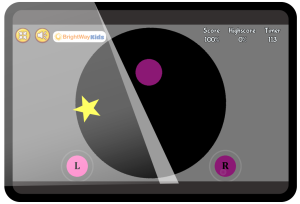
Color Burst-Visual Discrimination Switch
Why It Helps
Trains quick discrimination and attention switching by forcing rapid, accurate choices even as target colors swap positions.
Description
Tap the correct target based on its color and position; adjust instantly when colors switch.
Tracking Skill Building
Smooth eye movements improve reading speed and accuracy.
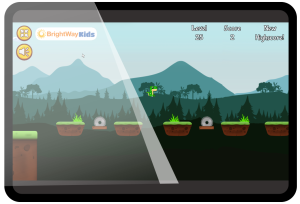
Dino Adventure
Why It Helps
Develops visual tracking, left-to-right eye movement, and visual-motor coordination by requiring players to navigate the dinosaur forward while responding to obstacles, reinforcing the same eye movement patterns used in reading.
Description
Use arrow keys or taps to move the dinosaur forward, backward, or to jump. Stay focused on the path ahead, moving smoothly from left to right to reach the goal while avoiding obstacles.
Visual Memory Boosters
Remembering letter/word shapes supports fluent reading and spelling.

Spelling by Shape-Whole Word
Why It Helps
Builds orthographic mapping by having children match words to their unique letter-shape outlines, reinforcing recall of whole word forms.
Description
Drag each word into the box with the matching shape outline.
Executive function
Related symptoms
Difficulty holding and manipulating information in memory
Struggles with multi-step instructions and sequencing tasks
Inconsistent performance in reading tasks due to memory lapses
Detailed explanation
Children with dyslexia often experience weaknesses in working memory, which makes it difficult to hold onto and manipulate information while reading. This can interfere with decoding words, following instructions, and keeping track of reading comprehension. Executive function issues, such as poor attention control and planning, also contribute to difficulties in managing reading tasks and remembering instructions.
Connection to visual processing skills:
Inadequate visual-motor integration can exacerbate working memory challenges, particularly when combining visual input with phonological processing. These deficits can make it hard for children with dyslexia to coordinate reading and writing tasks, leading to confusion and slow progress.
BrightWay Kids Activities
Working Memory Boosters
Exercisis designed to improve memory retention and recall.
Tachistoscope Word Groups
Why It Helps
Trains working memory by briefly showing groups of words, then requiring recall in correct order.
Description
View words briefly, then drag them into the same order as shown.
Sequencing and Organization Challenges
Sequencing-text to Image
Why It Helps
Organizing letters/words improves reading fluency.
Description
See a text sequence, then match images in the same order.
Attention and Focus Games
Enhance focus and reduce impulsivity in reading activities.
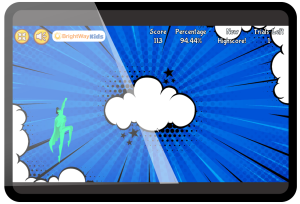
Stop/Go/Wait
Why It Helps
Improved focus reduces reading errors and boosts comprehension.
Description
Tap on green targets, ignore red, and watch yellow to decide.
We recognize that dyslexia can be a frustrating challenge for children and their families.
By using a multi-sensory approach, BrightWay Kids provides targeted exercises that strengthen reading, spelling, and writing skills. Activities are tailored to the specific needs of each child, ensuring that progress is made at an individual pace.


GET STARTED TODAY
BrightWay Kids can help
BrightWay Kids offers a focused program for struggling readers with dyslexia. Start with just a few clicks. No setup, No drills. Just fun adventures that are designed to address core brain processing systems.
BrightWay Kids is a foundational tool to build reading skills
Our carefully designed platform provides deeply engaging, targeted activities for different learner needs. This holistic approach translates to better engagement and faster immersion into the world of reading.
BrightWay Kids isn’t a cure — and it’s not a diagnosis. But it is real, science-backed support that fits into your daily life. Because when your child’s brain gets the right kind of practice…reading starts to feel easier. And even fun.
Open the door to your child's future
Subscribe to BrightWay Kids and get anytime access with an online account. Your monthly unlimited subscription is $79.99. Start or stop anytime.
Learn more about dyslexia
Research center
Symptoms of Dyslexia
Signs your child may be struggling.
Dyslexia and Visual Processing
The connection between poor reading and writing.
Dyslexia and Dysgraphia
How visual skills affect handwriting.
Dyslexia: Effective Online Strategies
Tech tools that address core brain systems.
Digital Games for Dyslexia
Can games really help with dyslexia?
Dyslexia: Effective Offline Strategies
Hands-on ways to boost visual skills.