
Poor Reading: A Deep Dive
Digital interventions for auditory processing disorder
Strategies and approaches for auditory processing disorder
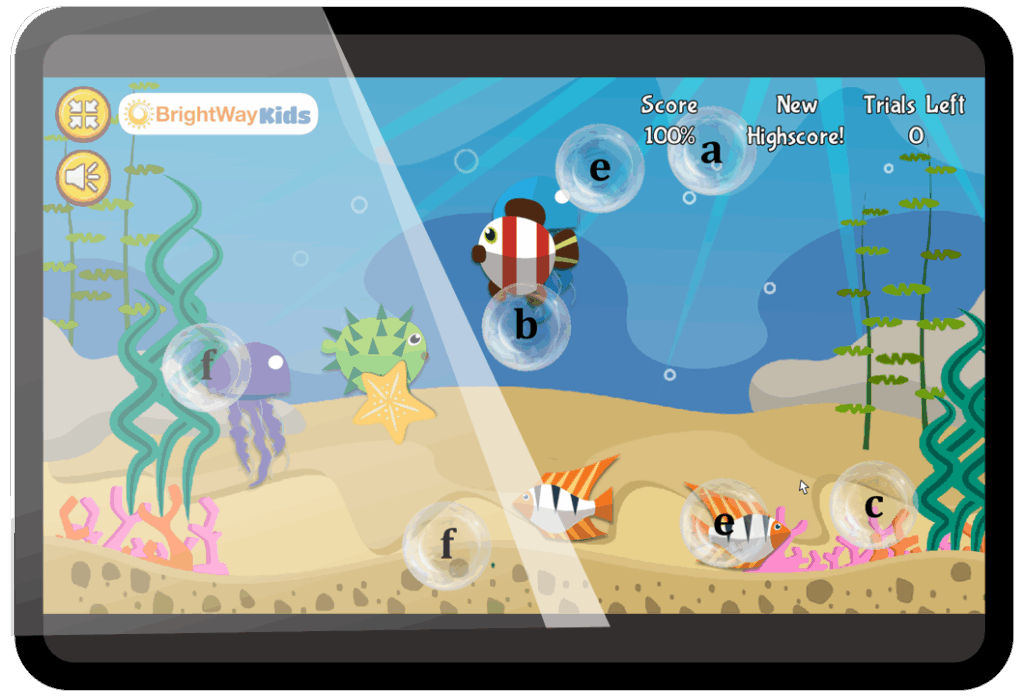
Digital interventions have become a powerful tool for helping individuals with APD, and many of these leverage the brain’s visual strengths to improve auditory weaknesses. Computer-based programs can provide intensive, adaptive practice on specific skills while engaging the user with visual feedback and game-like elements. Here are some proven types of interventions and how they harness BrightWay Kids:
Auditory training software with visual feedback
Traditional auditory training exercises (practicing distinguishing sounds, for example) are often delivered via computer programs. Successful programs present sounds or spoken words and ask the user to identify or discriminate them, but importantly they pair sounds with visual cues or graphics. For instance, a child might hear two similar syllables and see two characters on the screen, and must choose which character said the sound. Visual cues help keep the child engaged and guide them toward the correct answer, reinforcing learning. Research has shown that such computer-based auditory training – including dichotic listening training (practicing listening with both ears to different inputs) and listening-in-noise training – can improve auditory processing skills. The visual interface (fun animations, progress bars, etc.) taps into the brain’s reward system, maintaining motivation and focus during repetitive listening drills.
Phonological and language games
Some interventions use reading or language-oriented computer games to indirectly improve auditory processing. For example, a game might display a written word while saying it aloud, asking the user to break it into sounds or syllables (visual text paired with auditory input). These multisensory programs strengthen the connection between auditory and visual representations of language. Studies cited by Bellis et al. have noted improvements in phonological awareness and even reading skills in children with APD after using auditory-language software. By emphasizing visual input (text, pictures) along with sound, the programs engage the “visual brain” to support phonemic decoding – an essential skill for reading and spelling. Over time, users often see gains in language-related outcomes, not just auditory test scores.
Spatial audio training with visual spatial cues
Another effective strategy focuses on improving the ability to filter speech in noisy environments (a top complaint in APD). Computerized spatial processing training presents sounds in a simulated 3D soundscape (with stereo headphones) and uses visuals (like an on-screen arrow or a cartoon mouth) to indicate where the “target” sound is coming from. The user practices identifying or focusing on the target sound source amid distractions. This kind of training directly exercises the brain’s auditory attention and localization skills. Research finds that children with APD who completed spatial listening training became better at using spatial cues to understand speech in noise. In other words, their brains learned to leverage directional hearing – often with the help of visual indicators in the training game – to pick out important sounds, a skill that translated to real-world noisy settings.
Memory and sequencing apps leveraging visuals
Since APD often involves auditory memory issues, some digital tools target working memory and sequencing. For example, a program might speak a sequence of instructions or numbers and ask the user to repeat them, but also display visual symbols for each step as a prompt. Over time, the visual prompts may be faded to train auditory-only memory. These programs often use engaging graphics (like placing items in a treasure chest in the order you heard them) so that the user’s visual pattern recognition aids their auditory recall. Such interventions can significantly improve auditory memory and attentionmdpi.com. In fact, improvements in general cognitive abilities like attention have been observed as a result of auditory training that incorporated visual engagement. The visual element keeps the brain’s executive functions alert, which helps strengthen memory of sounds and sequences.
Summary
What makes all these computer interventions effective is that they can be personalized and adaptive. The software can start at a level the individual can handle and gradually increase difficulty (e.g., increasing noise levels, using more confusable sounds, lengthening instructions) while continuously providing visual reinforcement and rewards. This ensures the brain is constantly challenged just enough to promote neuroplasticity (adaptive rewiring) without causing frustration. The emphasis on the visual is twofold: it maintains motivation/attention and it often provides an alternate pathway for learning (if the auditory information alone isn’t clear, the visual can scaffold the learning until auditory processing catches up). Furthermore, many digital programs include data tracking. This means progress can be measured, and the visual display of progress (charts, scores, game levels achieved) gives immediate feedback to the user and therapist/teacher.
That feedback loop is motivating for the individual and also allows adjustments in therapy. Some programs also capitalize on the visual brain by incorporating game-like environments or stories, turning tedious listening drills into adventures where sounds correspond to visual story elements. This keeps the user’s eyes and imagination involved along with their ears. In summary, effective computer-based interventions for APD use multisensory integration, especially visual support, to bolster auditory processing. They focus on specific deficits identified in APD (such as sound discrimination, temporal processing, or speech-in-noise comprehension) and train them through repetitive practice wrapped in a visually engaging format. This combination has been shown to yield improvements not only in auditory test scores but also in functional areas like language comprehension, reading, and attention. By engaging our powerful visual brain in the service of auditory rehabilitation, these interventions help individuals with APD make better use of their strengths to compensate for and remediate their weaknesses.
Next up: APD skill building made fun
Explore BrightWay Kids’ targeted, game-based approach.
Not all screen time is created equal. In our next post, discover how BrightWay Kids’ interactive games are designed specifically to strengthen auditory processing skills—turning playful moments into meaningful progress.