
Poor Reading: A Deep Dive
Digital interventions for eye tracking problems
Strategies and approaches to build foundational eye tracking skills
Digital interventions have become a powerful way to improve eye tracking skills. Below are some effective computer-based strategies – including those incorporated in BrightWay Kids, an interactive vision training program – that help mitigate eye tracking issues:
Vision therapy video games and software
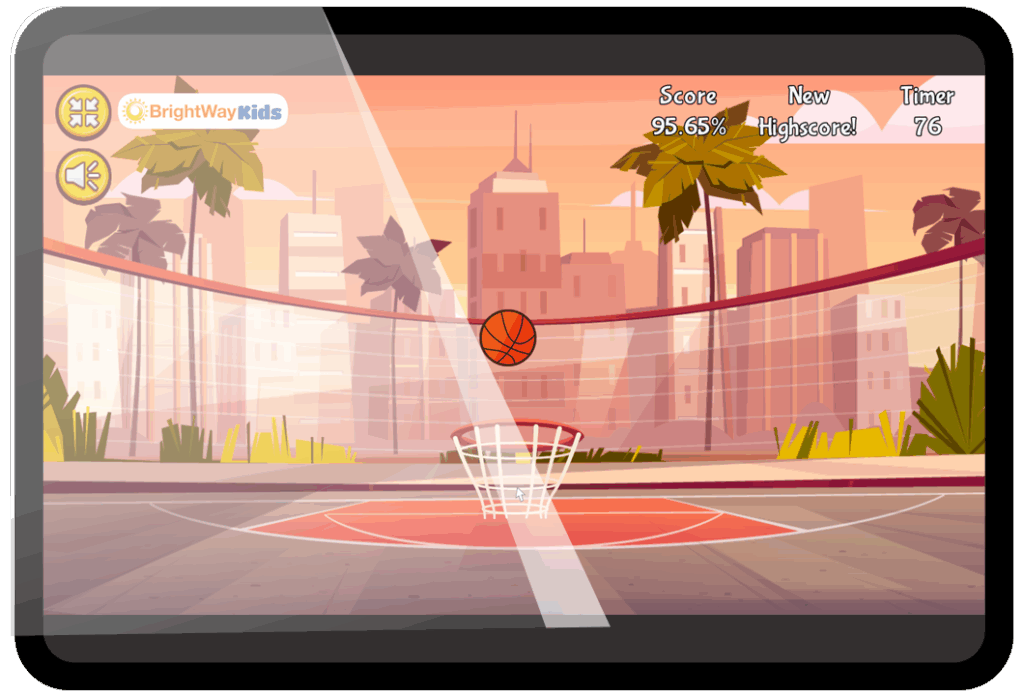
Specialized programs (such as BrightWay Kids) use engaging games to train the eyes. These games might have the child follow a moving dot across the screen, track a bouncing object, or rapidly shift gaze between targets. Such exercises are essentially virtual eye workouts that strengthen the neural control of eye movements.
Because they are fun and game-like, children are motivated to repeat them consistently. Over time, these computer exercises teach the eyes how to move smoothly from one point to another, improving pursuits (following moving objects) and saccades (jumping between fixed points). This directly translates to easier reading as the eyes learn to glide along lines of text with less effort.
Digital reading guides and trackers
Another strategy uses software to guide the reader’s eyes and reinforce proper tracking. For example, some reading apps highlight each word or use a colored line that moves across text, prompting the child’s eyes to follow. By pacing the visual input, these tools train left-to-right scanning and minimize line-skipping. They also free up cognitive load – the child doesn’t have to work as hard to stay on the correct line – allowing them to gradually increase reading speed. Over time, the eyes adapt to this guided tracking and become capable of doing it unaided.
Interactive visual processing games
Many computer interventions include puzzles or memory games that target visual perceptual skills (an area of focus in BrightWay Kids). For instance, a game may flash several objects and ask the student to quickly find a specific one, or ask them to remember a pattern. These activities train the brain to process and interpret visual information more efficiently. Strengthening visual perception in this way reinforces the foundation for tracking: the eyes are guided by what the brain expects to see. As visual memory and pattern recognition improve, students can more easily keep their place in text and recognize words, since their brain is better at guiding eye movements to where meaningful information is.
Eye-hand coordination apps
BrightWay Kids and similar platforms often include activities that require coordinating vision with motor responses. For example, a child might play a game where they have to quickly “pop” targets moving on the screen with a mouse or tap – essentially training the eyes to lead the hand. These exercises improve the synchronization of visual input and motor output, which is critical for tasks like copying notes or writing within lines. By practicing this in a digital game, the child learns to more accurately direct their hand based on what their eyes see, addressing issues like copying errors or illegible handwriting.
Gradual progression and difficulty adjustment
A key advantage of computer-based training is the ability to tailor difficulty and progressively challenge the visual system. Good programs start with easier tasks (large, slow-moving stimuli) and slowly increase the speed, complexity, or duration of tracking exercises as the user improves. This graduated approach ensures the child is continually challenged just enough to stimulate improvement without causing frustration.
For example, BrightWay Kids might increase the number of moving objects to track as the student’s skills grow. This adaptability maximizes the efficacy of training by leveraging the brain’s plasticity – each session pushes the visual system a bit further, leading to steady gains in tracking ability.
Next up: Eye Tracking and Digital Games
See how gaming can enhance eye tracking skills
Digital games aren’t just for fun—they can also help improve eye tracking. In the next post, we’ll look at how interactive gaming can be used as a powerful tool to strengthen visual tracking and support learning.