
Poor Reading: A Deep Dive
How digital intervention strategies for dyscalculia work
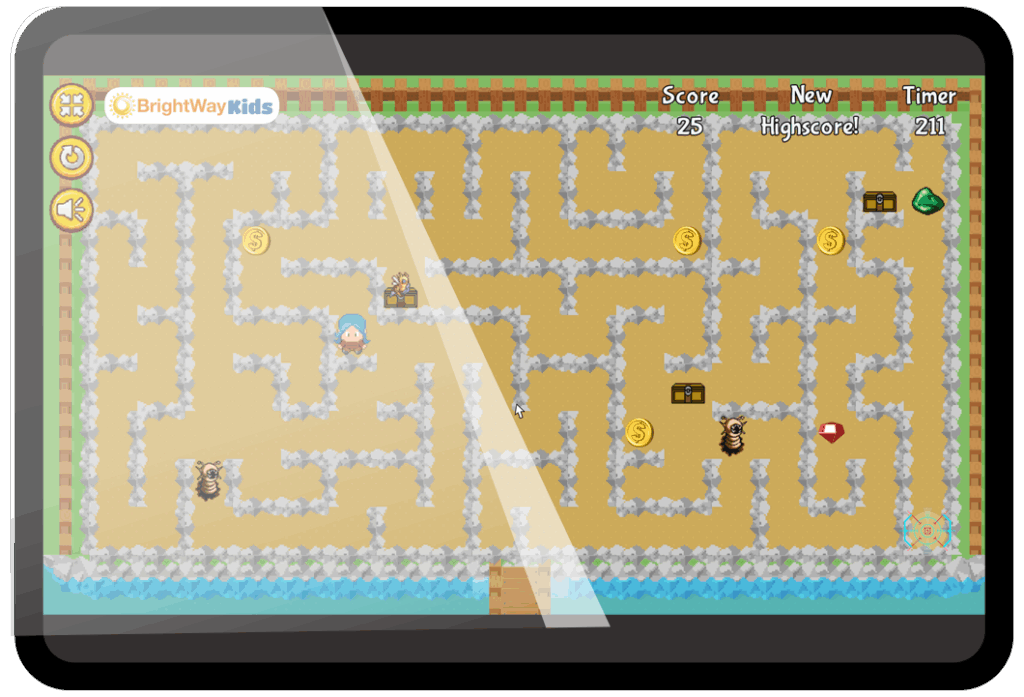
Digital games for dyscalculia
The effectiveness of digital interventions for dyscalculia is supported by scientific research and our understanding of neuroplasticity (the brain’s ability to change with practice). Several factors explain why a well-designed computer program can make a significant difference for learners with dyscalculia:
Directly targets neural weaknesses
As noted, dyscalculia is often tied to specific neural circuit inefficiencies (like in the intraparietal sulcus for quantity processing, or frontal-parietal loops for working memory). Computer interventions built on cognitive neuroscience principles aim to exercise those exact circuits. For example, a game that trains the mental number line is forcing the parietal lobe to engage and refine its representation of numbers. Neurological evidence shows this can drive change – one fMRI study found that after just a few weeks of intensive number-line training, children with dyscalculia began to show increased activation in the posterior parietal regions (the brain’s number area) and reduced hyper-activation of frontal regions (which they had been using to compensate). In essence, the training helped normalize the brain’s activation pattern, making it more similar to children without dyscalculia. This kind of evidence underscores that the brain is malleable: if we repeatedly practice a deficient skill in the right way, the brain can develop new pathways or strengthen dormant ones. The use of computers allows a very high number of repetitions (thousands of practice trials) in an enjoyable format, which would be hard to replicate with traditional methods – this high intensity practice is often key to rewiring brain circuits.
Multi-sensory reinforcement and feedback loop
Digital programs typically provide instant feedback, which is crucial for learning. When a student gets a problem wrong, the immediate correction helps them adjust their approach right away, preventing reinforcement of errors. From a cognitive standpoint, this creates a tight feedback loop that promotes faster learning. Additionally, engaging multiple senses (visual, auditory, kinesthetic via clicking/dragging) can form richer memory traces. Research shows that multisensory learning enhances comprehension, helping students connect abstract symbols (like “8”) to tangible representations (like eight dots) more robustly. By seeing, hearing, and interacting with math concepts on screen, children with dyscalculia can often grasp ideas that eluded them in a traditional lecture. The computer environment also tends to be non-judgmental and patient – the child can make mistakes without fear of embarrassment (the computer doesn’t get frustrated), which lowers math anxiety and encourages experimentation. Lower anxiety means a freer working memory for learning (an anxious brain is distracted by worry), so a gamified, low-pressure setting can biologically improve the capacity to learn math.
Personalization and adaptive learning
One size does not fit all in dyscalculia. Computer programs shine in their ability to individualize the learning experience. Algorithms can adjust the difficulty level, provide more practice on a type of problem the student struggles with, and even switch modalities (e.g., from numeric to pictorial representation) if the child isn’t “getting it.” This adaptive approach ensures the student is always working within their zone of proximal development – not so easy as to be boring, but not so hard as to be discouraging. Scientific studies have found that such adaptive learning systems lead to better outcomes than static practice. In one study, children who used an adaptive math training software (which our program emulates) made significant gains in arithmetic fluency and estimation compared to controls, and these gains were still present three months after training. The program was effective largely because it tailored the training to each child’s profile, reinforcing weaknesses until they improved. Moreover, computer interventions often track detailed data, allowing specialists to understand exactly where a child’s breakdown is occurring (e.g., always struggles when crossing 10s boundary) and address it. This data-driven tweaking of practice is something only a computerized approach can efficiently provide.
Motivation and engagement of the visual brain
Finally, the reason these interventions work is that students enjoy them and thus put in the time on task. A well-known adage in skill development is that hours of deliberate practice are required to build mastery. Children with dyscalculia typically spend less time on successful math practice in a regular classroom because it’s hard and unrewarding for them. But turn it into a game on a tablet, and the same child might spend 30 minutes eagerly doing numerical tasks, because it doesn’t feel like “work.” The visual appeal of graphics, the game rewards, and the sense of control (the computer game is patient and lets them try again) all contribute to longer and more focused practice sessions. Neurologically, practice is what drives change – the brain strengthens connections that are exercised repeatedly. Thus, by harnessing the child’s visual attention and motivation, computer interventions ensure far more practice actually happens. Many programs incorporate leveled challenge and reward systems (e.g. earning stars, unlocking new levels) that keep students hooked. This sustained engagement is often missing in traditional remedial math drills. Over time, the consistent practice leads to improved skills, which boosts confidence, creating a positive cycle. In summary, computer interventions work because they combine the best of neuroscience (targeted skill training, multi-sensory input, feedback) with the best of pedagogy (adaptive, student-centered learning and motivation), literally retraining the brain to handle math more effectively.
Summary
Computer-based interventions for dyscalculia are effective because they directly target the brain’s weak math-processing circuits through intensive, adaptive, and multi-sensory practice. These programs personalize learning, deliver instant feedback, and engage children through game-like experiences—making practice more frequent, enjoyable, and neurologically impactful. By combining cognitive science with motivating design, they help rewire the brain for stronger math skills.
Next up: Designed with purpose
Why BrightWay Kids games are different
At BrightWay Kids, we don’t just create games—we design targeted learning experiences. See how our approach addresses dyscalculia through skill-specific play that feels like fun but works like therapy.