
Auditory Processing Disorder (APD)
Causes of Auditory Processing Disorder (APD), the symptoms, and how BrightWay Kids brain-building games help

Recognize the signs your child might be struggling
Learn about the root causes and lead to reading difficulties
A guide to visual processing and why it matters
How BrightWay Kids improves reading mastery
Auditory Processing Disorder symptoms
The signs of eye tracking issues
APD problems present in many ways both at home and in the classroom that may be dismissed to the uninitiated:

Academic
- Misunderstanding speech
- Speech and language delays
- Stress or anxiety
- Ear discomfort
Physical
- Poor listening skills
- Difficulty with verbal instructions
- Struggling with reading
- Slow processing speed with oral instructions

What is an auditory processing disorder?
Auditory Processing Disorder (APD) is a neurological condition in which an individual with normal peripheral hearing has difficulty processing and interpreting sounds, especially speech. In APD, the brain does not accurately recognize or interpret the meaning of sounds despite normal hearing ability.
In short, auditory processing disorder, also known as central auditory processing disorder (CAPD), is a neurodevelopmental condition that affects the brain’s ability to process and interpret sounds. ability
Causes of APD and how BrightWay Kids helps
The exact cause of APD is unknown, but it is believed to be related to a dysfunction in the central auditory nervous system. Factors that may contribute to its development include:
BrightWay Kids is a therapeutic gaming platform that is uniquely designed to address auditory processing disorder by targeting the root causes while making the learning process engaging and effective.
Fun games that address auditory processing issues
Subscribe and get anytime access to the BrightWay Kids platform. Get the Auditory Processing monthly subscription – only $59.99 per month. Start or stop anytime.
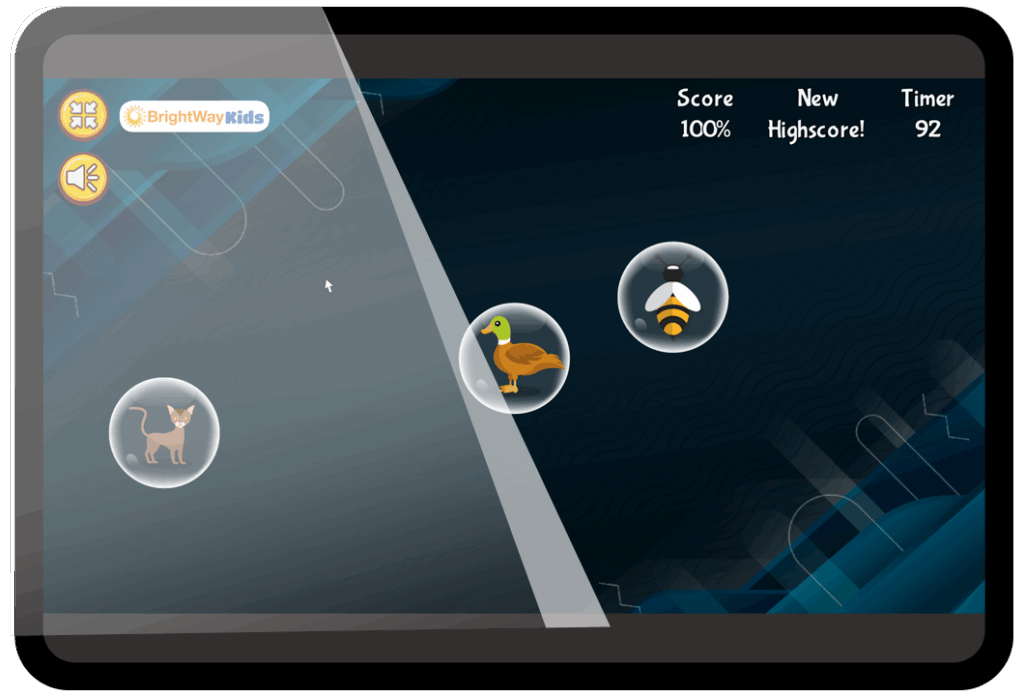
How BrightWay Kids can help your child thrive
Daily dose of therapeutic fun
At BrightWay Kids, we know how challenging it can be to watch your child struggle with auditory processing difficulties. It’s heartbreaking to see them misunderstand directions, struggle to follow conversations, or become frustrated with reading and spelling. That’s why we’ve designed targeted, engaging activities that leverage visual processing strengths to help retrain the brain for better auditory performance. Our interactive exercises address specific APD symptoms, using scientifically-backed techniques to strengthen sound discrimination, spatial hearing, phonological awareness, and auditory memory.
We understand your journey
Neurological
Related symptoms
Difficulty following verbal instructions
Poor auditory memory
Slow processing speed
Detailed explanation
Auditory Processing Disorder occurs when the brain has trouble interpreting sounds accurately and efficiently. Neurological factors—such as delayed brain maturation or injuries to the central nervous system—can disrupt how auditory signals are transmitted and understood. These disruptions make it challenging for children to follow oral directions, remember what they hear, or respond promptly to spoken instructions.
Connection to visual processing skills: Auditory processing difficulties often overlap with visual processing challenges. When the brain struggles to make sense of sound, it may also have trouble integrating what is seen and heard. This disconnect can cause inconsistent understanding and delayed responses. Strengthening these sensory links improves comprehension, organization, and task performance.
BrightWay Kids Activities
Auditory-visual Matching Games
Reinforce the connection between auditory and visual inputs, improving comprehension and response time.
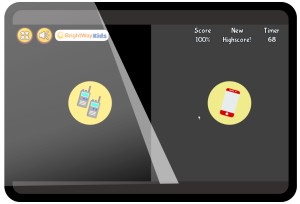
Listen Up
Why It Helps
Strengthens the fragile ear‑to‑eye link, so spoken information quickly triggers the correct visual meaning.
Description
Listen to the clue, then tap the picture that describes what you heard.
Sequencing Activities
Develop memory and processing speed through tasks that require recalling and organizing information.
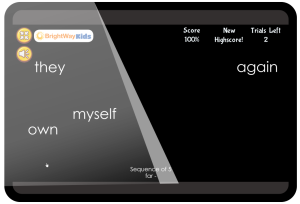
Auditory Story Sequencing
Why It Helps
Builds auditory working memory and step‑by‑step organization—key for following multi‑part verbal directions.
Description
Program reads a 3‑ to 5‑sentence story; scene cards appear scrambled; learner drags them into the correct order and taps ✓
Multisensory Integration Tasks
Strengthen the brain’s ability to combine sensory inputs for a cohesive understanding of instructions.
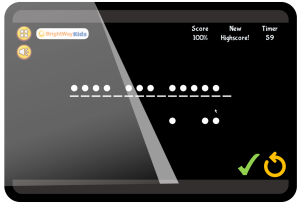
Audio-Visual Integration
Why It Helps
Forces the brain to merge simultaneous sound + sight, improving the speed and accuracy of sensory integration.
Description
Hear and see a rhythmic dot pattern on Screen 1; drag dots on Screen 2 to recreate the same rhythm.
Genetic
Related symptoms
Frequent misunderstanding of speech
Struggles with reading and spelling
Difficulty understanding nuances in language
Detailed Explanation
Genetic predispositions and developmental delays can hinder the brain’s ability to process sound effectively. These challenges often appear as difficulties in linking sounds to letters, decoding words, or interpreting subtle differences in spoken language. For example, children may mishear similar-sounding words or struggle with phonemic awareness, a key component of literacy development.
Connection to Visual Processing Skills
Developmental delays affecting auditory processing can also influence visual processing, since both rely on the brain’s ability to interpret sensory input efficiently. Strengthening visual skills, such as pattern recognition and discrimination, can support overall comprehension and literacy.
BrightWay Kids Activities
Phoneme Matching Games
Help learners connect sounds with their visual representations, aiding in decoding and spelling.
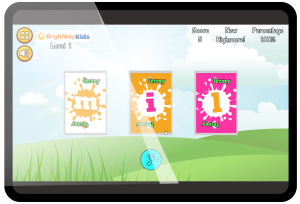
Frenzy Letter Sounds
Why It Helps
Automates phoneme-to-grapheme links, reducing decoding and spelling errors caused by weak sound mapping.
Hear a speech sound; tap the printed letter that makes that sound; repeat through the 26‑sound set.
Word Pattern Recognition Tasks
Improve literacy by strengthening the ability to identify and process word patterns visually.
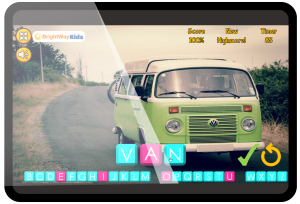
Word Builder
Why It Helps
Connects spoken words, ordered letters, and whole‑word shape, reinforcing visual word patterns.
Description
A picture (e.g., fish) appears; drag letters into boxes to spell the word; hear the word read aloud on completion.
Audio-Visual Rhyming Games
Lorem ipsum dolor sit amet, Enhance phonemic awareness through interactive multisensory activities.

Saccadic Wheel-Rhyming Words
Why It Helps
Pairs rhyme listening with a fast visual search, boosting phonemic awareness through multisensory play.
Description
Wheel spins words; program speaks “cat”; learner scans and clicks “bat”
Ear infections
Related symptoms
Frequent requests for repetition
Avoidance of oral activities
Struggles with rhyming and/or phonemic awareness
Detailed explanation
Chronic ear infections during critical developmental periods can disrupt the brain’s exposure to clear auditory input, leading to long-term processing difficulties. Children who experience these disruptions often miss out on foundational listening skills, making it harder to develop phonemic awareness and auditory discrimination.
Connection to visual processing skills
When auditory input is compromised, children often rely more heavily on visual cues for understanding. Strengthening visual processing skills can provide helpful compensatory strategies to support learning and comprehension.
BrightWay Kids Activities
Sound-Visual Pairing Exercises
Reinforce associations between sounds and images to strengthen comprehension.
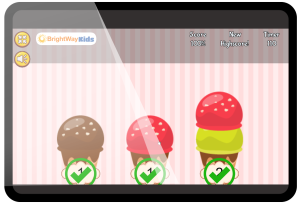
Scoop It
Why It Helps
Re-aligns spoken numerals with visual quantities, restoring links that may have weakened after periods of muffled hearing.
Description
Hear “five,” then drag five scoops onto the cone. If the count is wrong, the scoop count flashes red.
Sequencing Matching Games
Develop visual and auditory recall skills for improved memory retention.
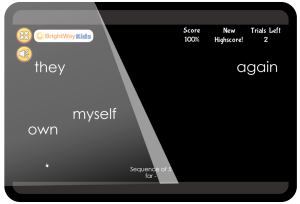
Sequencing-Auditory to Images
Why It Helps
Strengthens auditory memory and links each spoken chunk to a visual scene, helping compensate for early gaps in clear listening.
Description
Hear a verbal sequence; the matching pictures appear shuffled; tap on them in the order that you heard them.
Interactive Rhyming Exercises
Build phonemic awaremess throgh engaging multipsensory tasks.
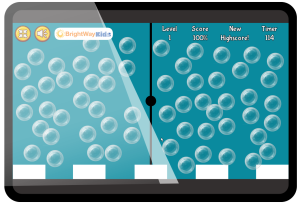
Rhythmic Pop
Why It Helps
Develops phonemic awareness and rhythm perception—foundational skills for rhyming and reading that can be weakened by ear infections.
Description
Listen to audio beats; tap bubbles on-screen in sync with the rhythm.
Sensory
Related symptoms
Trouble participating in group discussions
Difficulty with visual search
Poor response to verbal cues
Detailed explanation
Sensory processing difficulties affect how the brain integrates and organizes sensory input, including auditory signals. Children with these challenges may struggle to focus on one auditory source in noisy environments or to shift attention between speakers. These difficulties can disrupt participation in group discussions and reduce comprehension of verbal instructions.
Connection to visual processing skills
Sensory integration challenges often affect both auditory and visual processing. Strengthening visual filtering and discrimination can improve a child’s ability to focus on important auditory and visual cues in complex environments.
BrightWay Kids Activities
Filtering Challenges
Help learners focus on specific auditory challenges while ignoring distractions.
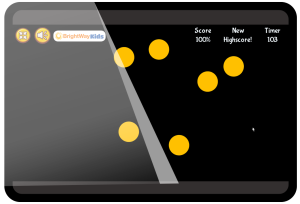
Multi-target Tracking with Static
Why It Helps
Trains focus on target stimuli while filtering out irrelevant auditory and visual distractions.
Description
Track highlighted targets while decoy dots move and static noise plays. Click the targets when they stop moving.
Directional Listening Tasks
Reinforce attention to verbal instructions combined with visual prompts.
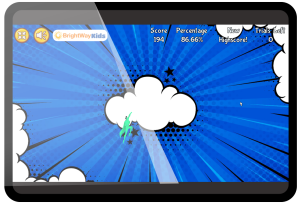
Stop/Go/Wait-Auditory Cues
Why It Helps
Reinforces quick, accurate response to verbal cues amid sensory clutter.
Description
Hear “Go,” “Stop,” or “Wait” over crowd noise; tap only on “Go.”
Multisensory Coordination Games
Strengthen integration of visual and auditory information.
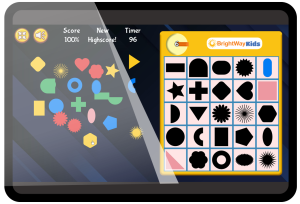
Beat the Clock
Why It Helps
Couples external rhythm to precise eye-hand action, improving cross-sensory timing and coordination.
Description
Drag puzzle pieces into cut-outs to the beat before the fuse runs out.
Environmental
Related symptoms
Easily distracted by background noise
Difficulty with note-taking
Inconsistent academic performance
Detailed explanation
Overstimulating environments or limited early auditory stimulation can hinder the development of auditory processing skills. Excessive noise disrupts a child’s ability to focus on important sounds, while insufficient exposure to language reduces the brain’s ability to interpret and respond to verbal input. Together, these factors can make it difficult to retain and apply auditory information during academic tasks.
Connection to visual processing skills
Environmental overstimulation often affects visual attention as well. Strengthening visual filtering skills can help children manage distractions more effectively and enhance their focus in noisy or chaotic environments.
BrightWay Kids Activities
Focus-building Tasks
Encourage sustained attention on specific auditory and visual stimuli.
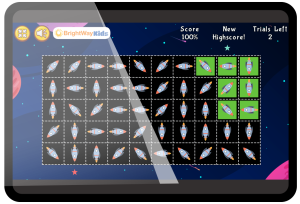
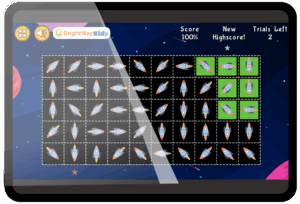
Rocket Trail with Metronome
Why It Helps
Extends sustained attention on a single audio-visual stream. The metronome beat paces responses and strengthens rhythmic timing, aiding focus despite distractions.
Description
Click rockets in order on each beat as the trail lengthens.
Visual Organization Challenges
Develop spatial awareness and task organization skills.
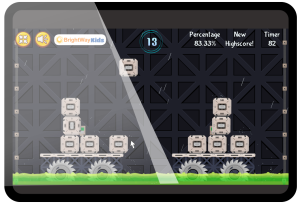
Box Stacker with Metronome
Why It Helps
Reinforces spatial planning plus rhythmic timing—skills for neat, organized work in chaotic settings.
Description
Drop swinging boxes on the beat to build a straight tower; crooked drops fall off.
Attention-shifting Games
Train learners to transition between visual and auditory stimuli
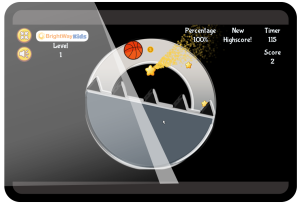
Escape with Crowd Audio
Why It Helps
Builds rapid focus shifts between threats and goals in noisy, unpredictable environments.
Description
Steer an avatar past falling spikes while crowd noise roars; grab coins, dodge spikes.
Trauma & injury
Related symptoms
Poor listening skills
Difficulty localizing sounds
Trouble following visual directions
Detailed explanation
Trauma or injury to the brain, such as a concussion, can disrupt auditory processing pathways, leading to reduced comprehension and slower response times. These challenges make it difficult to interpret spoken instructions or locate the source of sounds, which can significantly impact daily functioning and academic performance.
Connection to visual processing skill:
Injuries affecting auditory processing often impair visual-motor coordination and spatial awareness. Strengthening these visual processing skills can help children compensate for auditory challenges and improve overall comprehension.
BrightWay Kids Activities
Tracking and Localization Drills
Train learners to locate and follow auditory Targets
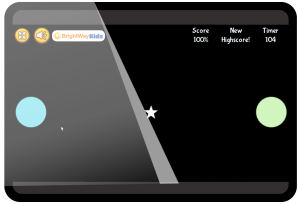
Speed Trainer-Auditory Peripheral Expansion
Why It Helps
Retrains auditory localization and rapid visual reorientation, which may be reduced after injury.
Description
Eyes stay on center; tone + flash appear in periphery; tap it, then re-center gaze before next cue.
Spatial Awareness Games
Reinforce the ability to interpret and organize visual information in real-world contexts.
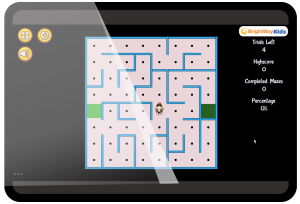
Mazes Voice Recognition
Why It Helps
Reinforces spatial navigation skills using auditory processing and memory, repairing directional confusion common after trauma.
Description
Navigate the maze using spoken directional commands (e.g., “Move left,” “Move up”). Then, visually confirm the route.
Problem-Solving Activities
Develop attention and coordination through engaging, interactive challenges.
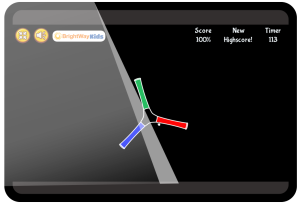
Color Spin-Auditory Memory
Why It Helps
Strengthens auditory sequential memory linked to spatial orientation, supporting problem-solving skills that may be affected by injury.
Description
Listen to sequences of color names, then tap the corresponding colors in the correct spatial order on a rotating wheel.
We believe in empowering children to overcome challenges and discover the confidence that comes with genuine progress.
Through fun, multi-sensory games, BrightWay Kids provides the tools kids need to thrive whether it’s filtering out background noise, distinguishing similar sounds, or remembering multi-step instructions.
You’ll see your child gain skills, independence, and pride as they tackle tasks once deemed impossible. We’re here to help your child succeed, and we’re excited to make learning a rewarding and positive experience.
GET STARTED TODAY
Choose Unlimited or Focus Plans
BrightWay Kids offers two subscriptions for kids with auditory processing disorder. The Focus plan offers games that address APD, ADD / ADHD, and eye tracking issues, while Unlimited offers the Focus games plus games for dyslexia, dyscalculia (math), and dysgraphia (handwriting).
- BrightWay Kids Unlimited $79.99 / mo
- BrightWay Kids Focus $59.99 / mo


Learn more about auditory processing disorder
Research center
Symptoms of APD
Signs your child may be struggling.
Visual Processing in Handwriting and Visual Expression
The connection between poor reading and writing.
APD and Dysgraphia
How visual skills affect handwriting.
APD: Effective Online Strategies
Tech tools that support visual tracking.
Digital Games for APD
Can games really help with tracking?
Auditory Processing: Effective Offline Strategies
Hands-on ways to boost visual skills.
Open the door to your child's future
Subscribe to BrightWay Kids and get anytime access with an online account. Your monthly unlimited subscription is $79.99. Start or stop anytime.
BrightWay Kids is a foundational tool to build core brain skills
Our carefully designed platform provides deeply engaging, targeted activities for different learner needs. This holistic approach translates to better engagement and faster immersion into the world of reading.
BrightWay Kids doesn’t replace professional diagnosis or therapy. It’s a supportive supplement made to fit your child’s daily routine. When kids gain control over how they see, hear, and focus then learning becomes easier. And more fun.