
Poor Reading: A Deep Dive
The science behind digital games and dyslexia
How digital games for dyslexia work
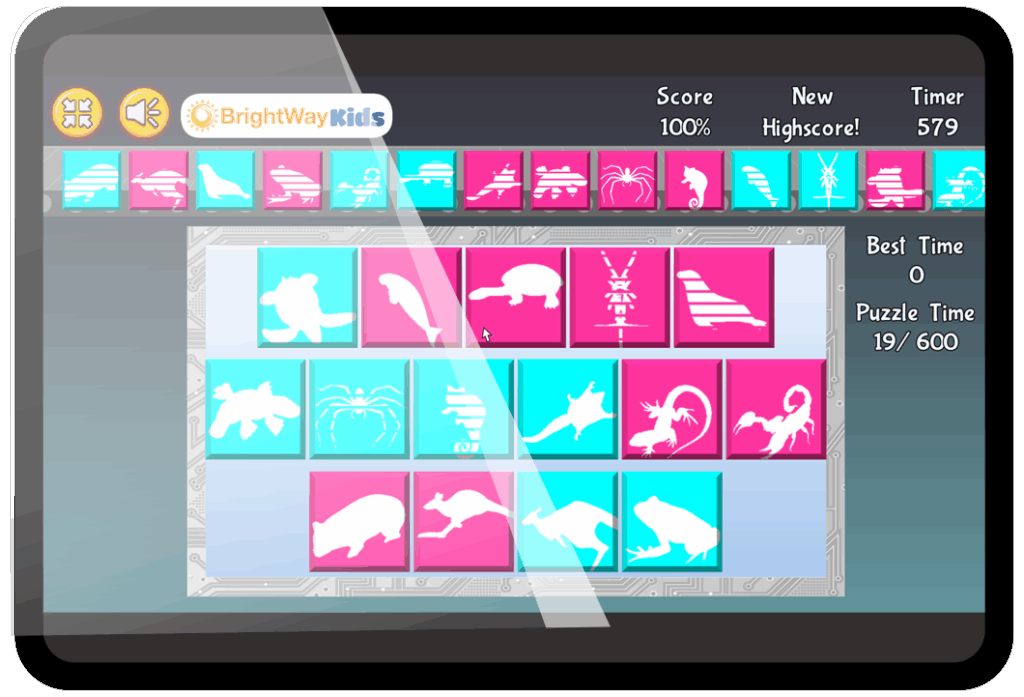
Computer-based interventions, especially those emphasizing visual learning (like the BrightWay Kids approach), have shown positive outcomes for dyslexia and dysgraphia. Several features of computer interventions explain why they are so effective:
Multisensory and multimedia presentation
Computers easily integrate multiple modalities – visual, auditory, and kinesthetic – into one learning experience. This aligns with the evidence that dyslexic learners benefit from multisensory instruction. For example, an app can simultaneously show a word, pronounce it, and animate a picture of it. This reinforces learning through different brain pathways. Studies have found that combining visual and auditory training yields improvement in reading skills greater than single-modality training. The consistent pairing of letters with sounds on a screen helps “rewire” the dyslexic brain to form those connections.
Adaptive individualized training
Quality educational software will adjust to the user’s performance in real time. If a child is breezing through a certain game, the program can make it harder; if they are struggling, it can simplify or repeat content. This individualization ensures the child is always training at an appropriate level – not bored, but not overwhelmed. It’s akin to having a one-on-one tutor 24/7. For dyslexic students who often have scattered skill profiles, this targeted practice on weak areas (whether it’s visual span, phonemic decoding, etc.) is highly efficient. The result is faster skill gains compared to one-size-fits-all instruction.
Intensity and frequency of practice
Computer interventions allow for intensive practice that would be hard to replicate in a normal classroom. A student can use a program daily at home, in addition to school support. Short, frequent sessions (15–30 minutes a day) of targeted exercises drive neural improvements through repetition. For instance, a visual attention training game used 10 minutes daily for a few weeks significantly sped up reading in dyslexic kids. This intensity of training – possible with software – can yield measurable changes in a relatively short time, essentially “jump-starting” skills.
Engagement and motivation (gaming elements)
Many interventions use gamification – points, levels, rewards, and fun graphics – to keep students engaged. Children often see these not as homework, but as playing a game. This is crucial because the amount of practice matters; a highly engaging program will get used more consistently. Improved attention and motivation also mean the child’s brain is more receptive to learning during the activity. Some studies even report that dyslexic children sometimes enjoy these computer games so much that their attentional skills improve, and those gains carry over to academics. In short, a motivated brain learns better.
Immediate feedback and positive reinforcement
When a child practices reading or writing on a computer, they receive instant feedback on each attempt (e.g., a sound for a correct response, or the program guiding them to the correct answer). This immediate feedback loop helps them quickly adjust and learn from mistakes, which is harder to achieve with paper-based practice. It also prevents the reinforcement of wrong patterns – the software can catch errors right away. Additionally, these programs usually celebrate successes (animations, praises), providing positive reinforcement that builds the child’s confidence. Confidence and reduced fear of failure encourage more risk-taking in reading, which leads to improvement.
Harnessing the visual strengths
Many individuals with dyslexia have areas of strength, often in visual thinking, pattern recognition, or spatial reasoning. Computer programs can capitalize on this by presenting information in more visual formats. For example, using graphics, color-coding, or visual puzzle-like interfaces can allow the student to employ their visual brain to learn what was previously taught only verbally. This alternative route to learning (often called the “visual pathway” to reading) can be the key that unlocks progress when traditional methods plateau. Research in France on dyslexia interventions shows that training visual attention span (a non-phonological approach) significantly improved reading of irregular words – an area phonics alone hadn’t fixed. This demonstrates the value of computer exercises that leverage visual processing to bolster reading.
Data tracking and customization
Another benefit is that software typically logs performance data. This means progress can be monitored objectively – for example, the program might track reading fluency gains, or how long the child can focus on a task. This data can guide educators or therapists in fine-tuning the intervention. It also means the program can automatically present targeted practice on each symptom: if it sees the user is consistently struggling with, say, visual memory games but doing well in phonics games, it can allocate more time to the former. Such responsive customization is difficult to achieve otherwise.
Summary
In essence, computer interventions amplify effective teaching principles (intensity, feedback, multisensory input) and minimize some human limitations (fatigue, limited time) by using technology. They provide an engaging, visually rich platform for the brain to form new connections. Particularly for dyslexic/dysgraphic learners, who may have been demoralized by traditional methods, the fresh approach of a well-designed program can rekindle hope and demonstrate improvement in weeks – a huge psychological boost. Indeed, one study noted that just 12 hours of a specific action video game intervention improved dyslexic children’s reading speed more than a year of natural development, a testament to how powerful targeted visual-attention training can be.
Next up: From research to real life
How Brightway for dyslexia works
At BrightWay Kids, we turn research into action. Next, see how our game design supports the specific skills kids with dyslexia need to thrive.