
Poor Reading: A Deep Dive
Why computer intervention strategies work for dysgraphia
The science behind why computer-based intervention strategies work
Computer-based strategies for dysgraphia might seem very different – from visual feedback to serious games – but they share some common neuroscience principles that explain why they help the brain learn to write better. Here’s a look at why these interventions are effective:
Intensive practice and neuroplasticity
The brain learns skills (like writing) through practice and repetition, by strengthening neural connections – a concept known as neuroplasticity. Computer programs can deliver high amounts of practice in a focused way. For example, a child might trace 20 letters in a session with instant feedback on each; this kind of concentrated practice helps rewire the brain’s motor pathways for writing. Neuroimaging studies on related learning disorders show that after targeted intervention, children’s brain activity patterns can normalize or become more efficient. In dysgraphia, we know the brain’s writing network is less efficient and has to work harder. Practicing with computer guidance essentially trains the brain to find a better route – connections between visual areas, motor planning areas, and feedback-processing areas get strengthened each time the child corrects a letter based on the visual cue. Over time, these networks can reorganize to handle writing more automatically. The bottom line: computer interventions harness neuroplasticity by providing consistent, repetitive training in the specific areas of deficit, which is exactly how the brain improves a skill.
Multisensory engagement lights up more brain areas
Many computer interventions are multisensory – they involve visual, auditory, and kinesthetic elements. Neuroscience tells us that when multiple sensory pathways are activated, it can form more robust associations. For a child with dysgraphia, seeing a letter, hearing its name or a prompt, and moving their hand to form it (even if digitally) creates a richer neural encoding than one modality alone. Functional MRI studies of writing show that handwriting by itself already activates a broad network (including visual and motor areas). If we add auditory cues or game rewards, we recruit the brain’s reward system and auditory processing too. By engaging the “visual brain” alongside the motor brain, these interventions may help compensate for weak links – for example, a bright visual cue might spur the motor cortex to adjust more than a verbal cue would. Essentially, the interventions work because they’re tapping into the brain’s natural preference for integrating sensory information, thereby reinforcing learning through multiple channels.
Immediate feedback and error correction
One huge advantage of computers is immediacy of feedback. Neuroscience shows that feedback is critical for motor learning – the brain learns from errors by adjusting subsequent attempts (a process involving the cerebellum and cortical feedback loops). Traditional handwriting practice might mean a child writes a whole page and an adult corrects it afterward; by then the neural imprint of errors might have set in. In contrast, a program that beeps or changes color the moment a letter is malformed gives the brain instantaneous information: “Oops, wrong trajectory, fix it now.” This real-time feedback accelerates learning. It’s similar to how a video game tells you right away if you made the wrong move, prompting you to try a different approach. Studies on visual feedback (like the colored pressure feedback) showed improved handwriting because children could gradually adjust their pressure and see the results immediately. Neuroscientifically, this helps because the brain’s error-correction mechanisms (in motor cortex and cerebellum) are engaged in the moment, forging a better motor pattern for next time. Over many trials, the action becomes more accurate and automatic.
Motivation and reward pathways
Let’s face it – writing practice can be tedious, and kids with dysgraphia often dread it, which can shut down learning. Computer interventions often incorporate game elements, points, or fun animations, which activate the brain’s reward pathways (dopamine). When a child is motivated and enjoys an activity, their brain is more receptive to forming new connections. A chore becomes a challenge to beat or an adventure. This reduces the anxiety or frustration that can interfere with learning. Neurologically, reducing stress is important: high frustration can activate the amygdala (emotional center) and actually inhibit the prefrontal cortex function needed for learning. By making practice enjoyable, computer games keep the child’s emotional brain in a positive state, optimizing their cognitive processing. In short, these strategies work not only on a cognitive level but on an emotional/neurological level – a happy, engaged brain learns better.
Visual processing emphasis remediates visual deficits
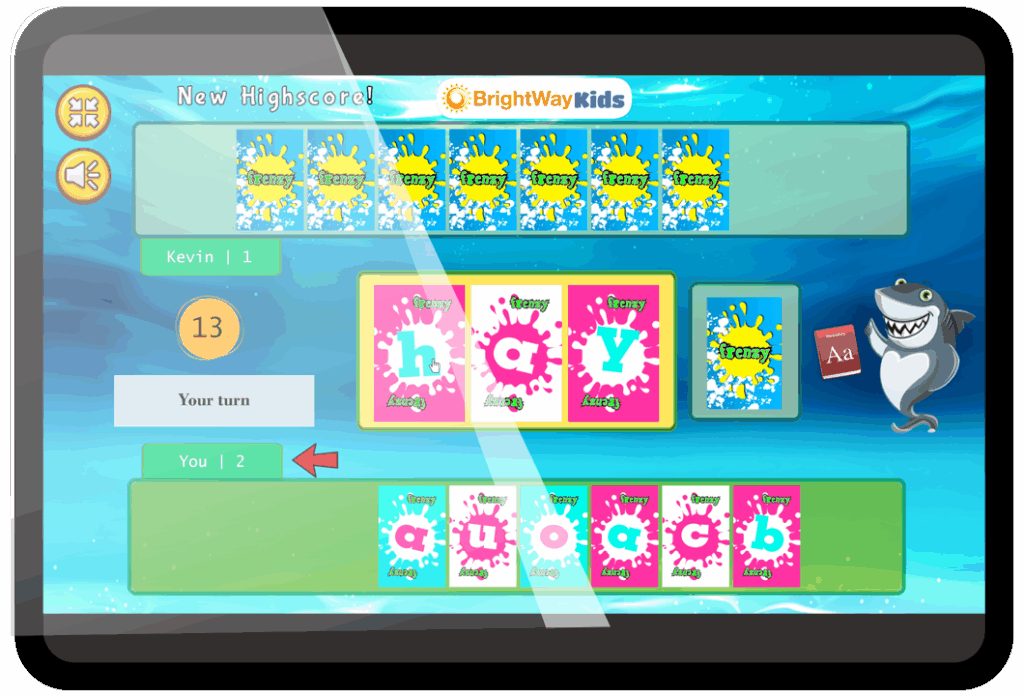
Because many of these strategies explicitly target visual skills (like having to pay attention to visual cues, or improve visual memory via repeated exposure to letters on screen), they directly exercise the brain areas that were underperforming. Think of it as going to the gym specifically for your “visual cortex” and “parietal lobe.” For example, a serious game that requires identifying subtle differences in shapes will strengthen the child’s visual discrimination ability; as that improves, the brain can more easily tell if a written letter is correct or not. The neuroscience concept here is specificity of training – training a particular brain function leads to changes in the neural networks responsible for that function. One study in the American Journal of Occupational Therapy found that a program training visual and haptic (touch) perception led to improved handwriting speed and accuracy in children with dysgraphia. The visual brain was exercised and it translated to better output. So these computer tools work because they zero in on the weak sub-skills (be it visual memory, spatial awareness, etc.) and give them a workout, resulting in measurable improvements that carry over to handwriting.
Breaking down the task and reducing cognitive load
Writing is so demanding because the brain must juggle multiple tasks (spelling, letter formation, spacing, content) simultaneously. Many computer interventions simplify or isolate one component at a time. For instance, a child might use a program that only practices forming the letter “a” correctly 10 times, without worrying about spelling a whole word. This isolation allows the brain to focus its neural resources on that one component, leading to mastery that can later reintegrate with the whole. It’s akin to practicing scales on a piano before playing a full song. Neuroscientifically, this reduces the load on working memory and executive control during practice, which is beneficial because children with dysgraphia often have limited working memory for writing tasks. By automating sub-tasks through repetition, the brain frees up capacity for higher-level aspects. Eventually, when writing actual sentences, those sub-skills (forming letters, remembering shapes) consume less mental energy, allowing more focus on content.
Personalization and adaptation
Computer programs can often adapt to the user’s level, ensuring the child is appropriately challenged but not overwhelmed. This adaptive practice is ideal for brain learning: tasks that are too easy don’t spur growth, and tasks that are too hard cause disengagement. Many educational software use algorithms to adjust difficulty (for example, increasing speed demands as the child gets faster, or introducing complexity as they demonstrate mastery). This aligns with the concept of the “zone of proximal development” in educational theory, which has neurological parallels – learning is maximized when working just beyond current ability. A well-designed program keeps the child in that sweet spot, which maximizes neuroplastic change. Traditional pen-and-paper can be hard to individualize in the same way.
Summary
In essence, computer interventions work because they create an optimal learning environment for the brain: high-engagement, multisensory input, constant feedback, and repetitive targeted practice. Brain research supports these elements as key for acquiring new skills. For children with dysgraphia, whose neural wiring for writing is inefficient, these tech-based strategies provide a powerful jump-start – helping them build new pathways or strengthen alternate routes to improve their writing ability. Over time, the goal is that these improvements carry over off-screen, too (and indeed, research shows many do generalize to better paper-and-pencil performance). The computer is essentially acting as a patient, always-available coach that reinforces the brain’s learning every step of the way.
Next up: BrightWay Kids in action
SUB HEADER HERE
Eye tracking issues arise when the brain struggles to coordinate eye movements, often due to neurodevelopmental delays, brain injuries, or vision disorders. Conditions like concussions, strokes, and binocular vision problems can disrupt smooth tracking, making reading and focus challenging.